Doing Good “Right”
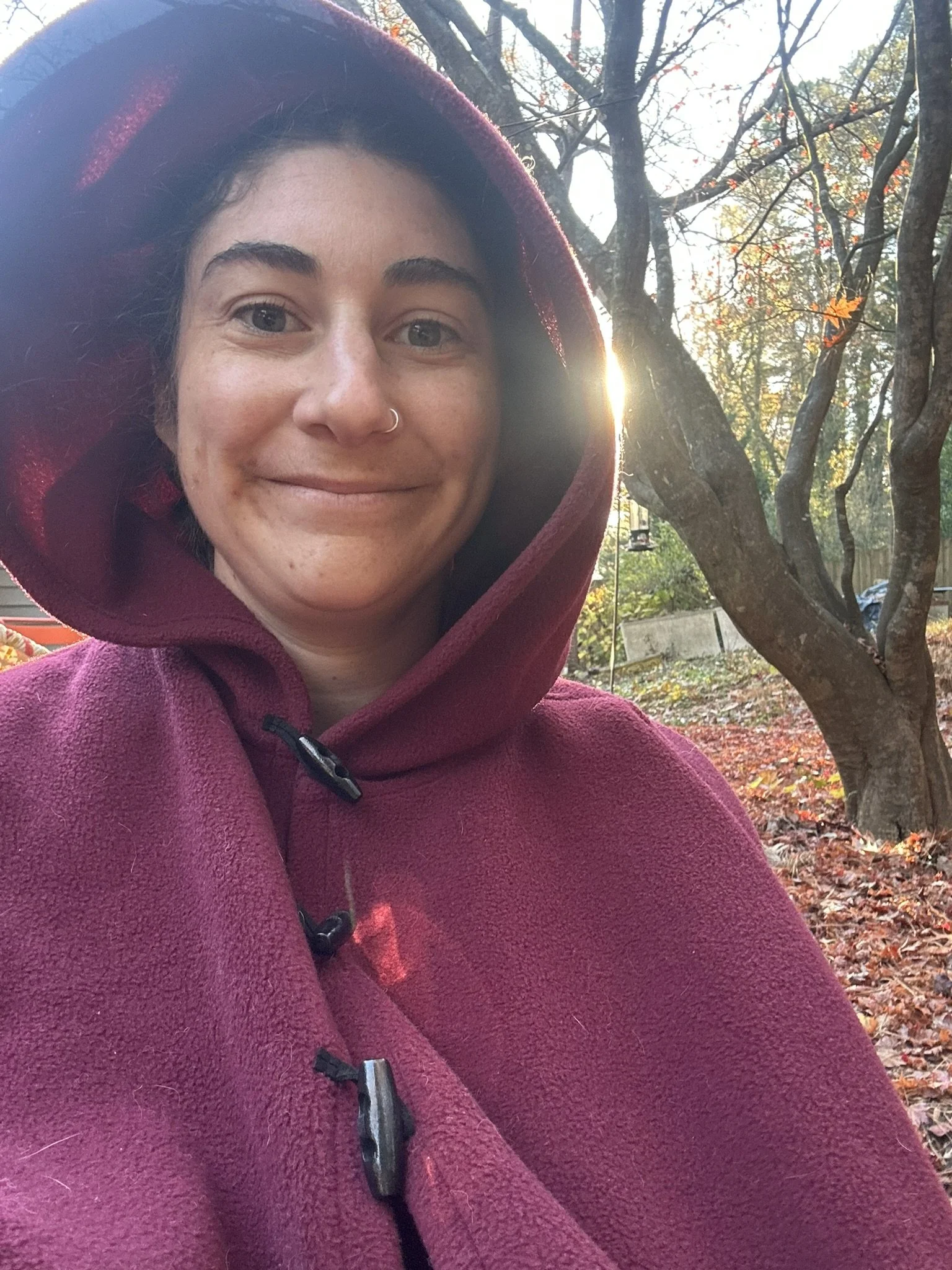
I meditate every morning on our porch these days, and I’ve been sticking to it even on the colder mornings by cuddling in my fleece cape.
I am going to start with a bummer, but I promise I will circle it back around to “hopeful.”
Last week, ICE and Border Patrol came to Raleigh and the surrounding area. It was terrifying, in that our brown communities were so immediately in danger of being at best harassed and at worst kidnapped.
Raleigh’s organizational response in keeping our neighbors safe, however, blew me away. Within 24 hours I had been sent, by friends, the right channels to join to learn how I could volunteer. I watched people take up community watch in vulnerable neighborhoods and efficiently and safely report possible and confirmed sightings.
I signed up for a shift last Wednesday morning. I was quickly trained by a community member and then immediately sent out, with a woman I immediately made friends with, to drive around relevant neighborhoods.
We got along great, and we did this for under two hours. But I had never done anything like that, and I had a couple other stressful things happen last week in my personal life, and that one short, pleasant shift alone gave me enough heightened adrenaline and sadness that I had to take a few days to recover.
Today, a week later, I went back and did a different community shift. Maybe this is the pace I can volunteer at, I thought. Once a week. It’s better than not volunteering at all, right?
Sure, but sometimes my brain convinces me differently. If I don’t volunteer at all, I don’t have to face the shame and guilt that I’m not doing as much as the others around me. If I volunteer once a week, or once a month, I’m faced regularly with people who are doing more, like I could be, if only I were more . . . capable? Giving? Well-prioritized?
Sometimes I worry so much about what people think of how often or how well I’m volunteering that it becomes intimidating to go at all.
“I think this is something we all struggle with,” I said during a conversation with a new friend today. “How to do good, consistently, without burning out or hitting the shame wall.”
I think back to 2020, when it seemed a revolution was taking place. White people were reckoning with our responsibility, people were gathering in the streets, we were making demands of ourselves and our representatives at an unheard of pace.
That was during quarantine, when we all had an abnormal amount of time and energy. When the world opened up again, we couldn’t keep it up.
I think of campaigns for presidents or representatives we believe in: I myself have done letter writing, text banking, and phone banking, all for a limited amount of time until I burnt out or the campaign was “done.”
Changing things for the better isn’t a “done” kind of thing, it’s cyclical. We gather and live and witness and reflect and organize and change, in cycles.
And we have to find ways to engage that excite us, that make us feel good, so that it feels like a pleasure, something to be grateful for, rather than homework to be finished. Text banking every night for one week when it’s “all hands on deck” time and then crashing out so hard I don’t ever do it again is not the solution.
I don’t say all this to dissuade people from text banking or phone banking: PLEASE do those things if you are good at them and enjoy them! I’ll keep doing other work that you don’t like as much. We’ll balance it out.
I’ve learned, through my panicked, urgent letter writing, text banking, and phone banking that I am not suited for certain kinds of work. For me, phone banking immediately gave me a panic attack. Letter writing was better: I liked the way I could put my personality into my signature and the feeling of working with paper.
Still, it didn’t last long: the campaign ended and I ran out of steam anyway. (I did the letter-writing during the pandemic.)
“I think this shame, about doing good ‘right,’ is a form of people pleasing,” I told my new friend today. “I’ve been writing about people pleasing and I think this is my topic for this week: how we’re so afraid of what the other do-gooders will think of us that we make it harder for ourselves to join in.”
“Especially if we were gifted children,” my friend said wisely. We talked about how the impulse to cultivate external validation can be the strongest one sometimes. Self-validation is extremely hard in a group of people we admire so much.
But the other do-gooders aren’t watching you. They’re probably worried about how their activism looks to you. It’s a trap, for all of us.
When I did my community shift this morning, I found out that most of the other people in the group were either retired, partially-retired, or worked for organizations involved in this kind of community organizing. I was kind of the odd one out, job- and age- wise.
What relief to find that there wasn’t anyone who had the magic formula for making a living AND constantly being there for your community. The person in charge just thanked me for me being there. I was glad I went. I probably can’t go more than once a week, and this may or may not be a kind of volunteering I choose to stick with long term. I’ll have to think about it.
I believe thinking about it is an important part of the process. Do you want to be involved in your community, to volunteer or find out where you are needed? I recommend asking these questions first:
What kinds of volunteering activities do I enjoy?
What kinds of settings do I like working in?
What skillsets do I enjoy bringing to the table?
How often can I volunteer out of the house, realistically?
And asking these questions and being honest about the answers requires slowing down.
Slowing down feels good.
It’s worth the self-work of figuring out our shame about what we can and can’t do.
It’s easier at first to avoid this, and instead cycle through urgency-panic mode when we see a slot to sign up for whatever do-gooding is needed, but it feels worse over time.
I also recommend thinking in 200-year perspective! Marginalized communities have shown us that slow and steady is the move: organizing work that started in the nineties is paying off in elections now. Let’s think about how the way we put energy into visioning and organizing now will impact our cities 20, 50, 200 years from now. What beautiful worlds for the future can inspire us in this moment?
Because while there are hard days, knowing kindred spirits are out here hoping and visioning nearby, and meeting up to actually Do Stuff to move us towards those visions, makes me feel happier and more hopeful all day, every day. It changes the way I see the world around me, and makes it one I enjoy living in.
So, have you fallen prey to the trap of “Everyone out here is doing more than me, and I have to do that much or I can’t live with the shame?”
It’s okay, me too. I’m reaching out a hand with this email to say, “it doesn’t have to feel that shitty. Let’s think about ways it could feel good.”
~•~
P.S. I am starting a Fiction Writing Workshop! This has long been a dream of mine, and it’s finally time. There are 8 spots total, and I have 4 or 5 left. Read the details below, and if you’re interested in joining, send me an email!
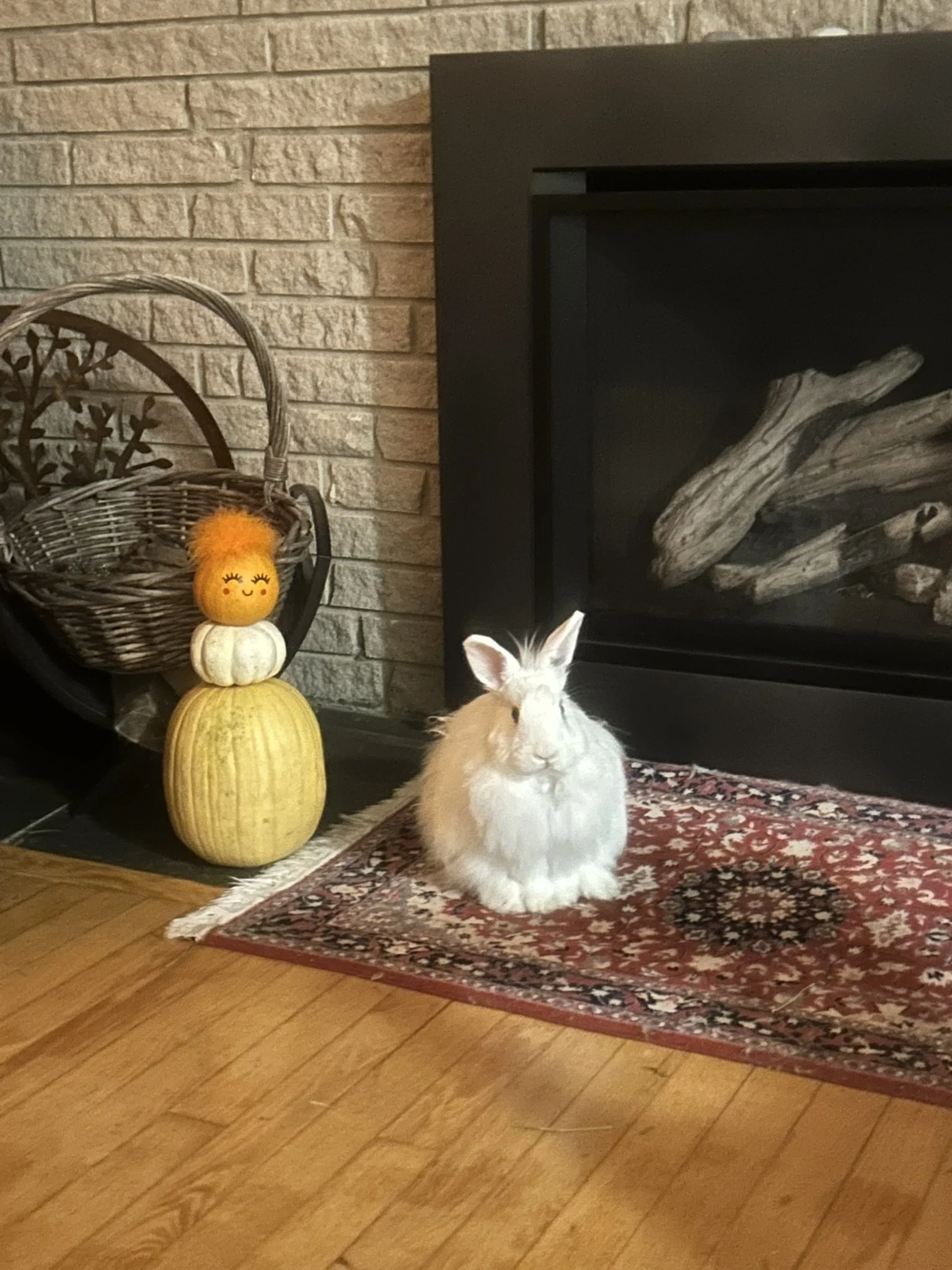
The vibe at my house is “fluff”
Village Witch’s Corner
Spell of the Week :
Take some down time. Slow down into winter-mode. Enjoy this.
Question(s) I'm asking this week:
What are the conversations or connections this week that make me feel the presence of a better future 200 years from now?
What I’m Reading:
Parable of the Sower, still, but to balance it out I’m reading a book in the Bridgerton universe before bed.
Wheel of the year:
Winter is here, December is next week, the light wanes, welcoming us into hibernation. Lighting candles and spending time under blankets are ways to celebrate. Slowing our motion and noticing what magic seeps in when we do is also a great one. The weight of the year so far starts to fall away and make space for the new to come in at the Solstice. To learn more about living in alignment with the seasons, sign up for my Patreon (free and paid options available)!